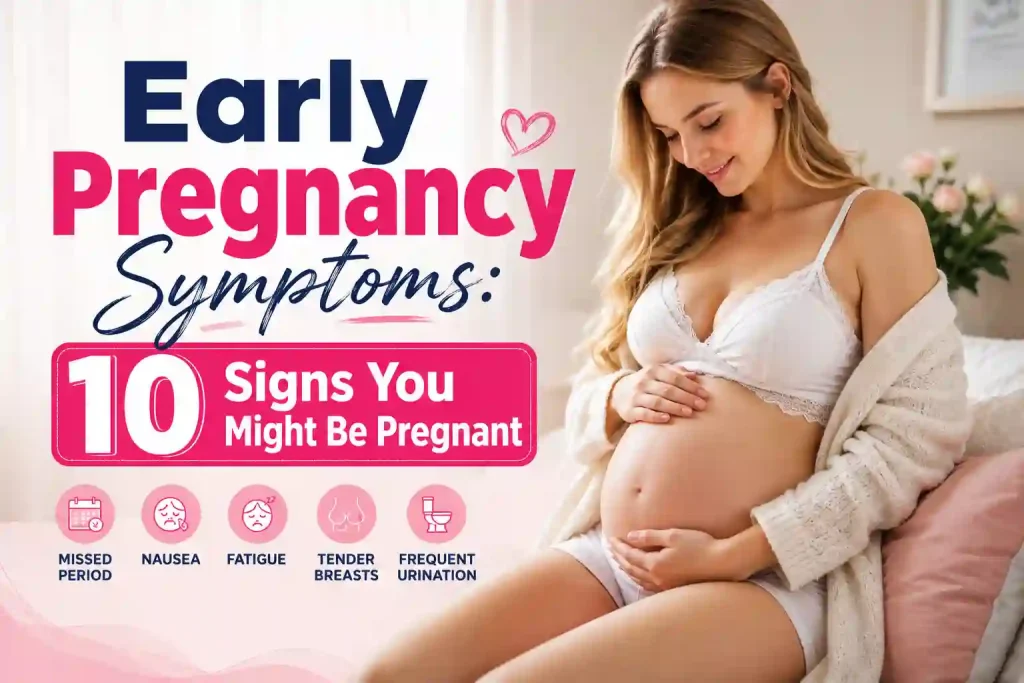
Some of these signs are similar to the ones you may experience in early pregnancy such as delayed period, vomiting, sore breast, tiredness and urination. Women have symptoms 1–2 weeks after conception (some women report as early as day 6–8 post fertilization). Home pregnancy tests are the best way to know for certain whether you are pregnant.
I remember the week I couldn’t provide any explanation surrounding what my body was doing. It was so bad that I was fatigued by lunchtime, unable to smell my lovely coffee and experiencing strange sensations of pulling deep in my gut. I was not late – not even close. But something seemed wrong. Off. As if my body was trying to say something, which I wasn’t ready to listen.
Sound familiar?
That confusing cocktail of symptoms is what drives millions of women to the search engines every day. This isn’t your imagination. The changes in your body actually begin to take place astonishingly fast following conception — often before you even have a pregnancy test showing that it does. In this article, we will review the 10 most common early signs of pregnancy, how and when they usually start, how they change from PMS and at what moment it warrants a visit to the doctor.
When Do Early Pregnancy Symptoms Start?
The American College of Obstetricians and Gynecologists (ACOG) say that most early pregnancy symptoms occur approximately 6–8 days after fertilization. But the timing here all depends, and even it can differ between pregnancies, though.
For some women, the changes occur almost immediately. Some are symptom-free in the first trimester. Neither experience is abnormal.

10 Things To Look Out For If You Think You Are Pregnant
Missed Period
The most apparent and trusted early symptom of being pregnant is a missed period. A test is immediately when you’re over a-week-delayed, sooner in the event that you normally casually have your cycle.
However, stress, illness or hormonal changes can delay your period too — so a missed period on its own isn’t necessarily definitive.
Nausea or Morning Sickness
The term morning sickness is a bit of misnomer. Nausea was the worst after dinner for me when I was pregnant — in bed. It can go off at any time of day.
Pregnancy nausea usually develops between weeks 4–6 of pregnancy due to rising levels of hormone human chorionic gonadotropin (hCG). If you ask the Mayo Clinic, we will learn that about 70–80% of pregnant women will have some type of nausea during their first trimester.
Tender or Sore Breasts
Breast tenderness is one of the first and most life,periods symptom. Your breasts can feel swollen, heavy or more sensitive to touch sometimes as soon as one to two weeks post-conception.
This was the first thing I noticed. My bra began to feel constricting in a way it had never felt before and even gentle touch was painful.
Fatigue
Even in its earliest stages, growing a human is hard work. Higher levels of progesterone can leave you feeling like a marathon runner by lunchtime. I could barely make it past 8 p.m. on the couch during my first trimester without falling asleep out of nowhere!
Fatigue often surges in the first trimester but then gradually lifts in the second.
Frequent Urination
Early pregnancy could be responsible for any increase how many times do you find yourself going to the bathroom. With the increase of hCG and blood flowing more to your kidneys, your bladder is filling at an abnormal rate.
This symptom may begin as early as week 6, or increase in severity due to the growing uterus pressing on your bladder.
Light Spotting
Light pink or brown spotting, called implantation bleeding, may take place when the fertilized egg connects to the lining of the uterus (generally 10–14 days after conception). It is less heavy than a normal period, and shorter in duration.
Much of the time, women misinterpret this as the beginning of their cycle. I did, the first time. It was only the tiniest dab on my underwear, nothing beyond that.
Mild Cramping
There may also be mild cramps associated to implantation often described like period pains but lighter. These cramps occur for a shorter period of time and are less intense than menstrual cramps.
Get in touch with your doctor this can be heavy bleeding, if cramping is intense.
Food Cravings or Aversions
The next day you want peanut butter with pickles at midnight (I guess it happens sometimes, but I mean classic). One next, your go-to meal makes you sick. Hormonal fluctuations, which can change taste and smell receptors, drive food cravings and aversions.
They can come as early as a few weeks into a pregnancy and they can vary widely from individual to individual.
Increased Sensitivity to Smells
This fooled me completely. I used to love the smell of garlic cooking then suddenly severed my gag reflex. Increased sense of smell (called hyperosmia in medical terms) is one of the rarer, yet frequently documented signs of pregnancy.
It is thought that higher than average estrogen levels may enhance the sense of smell, but the mechanism remains incompletely understood.
Mood Changes
Early pregnancy brain is driven by hormone changes you can tell PMS territory: Think separated emotional swings that just appear to be worse. Crying at a commercial, freaking out over something small, or just plain feeling overwhelmed for no real reason are all examples.
Common Early Pregnancy Signs Before a Missed Period
That also means you may start experiencing the symptoms—like implantation bleeding, mild cramping, fatigue, and breast tenderness—that many women have before their period is even late. Often called the “two-week wait” symptoms as they occur in between ovulation and when a period is expected.
Unfortunately, these early signs can be things that we blow off as, “oh it’s just PMS” Keeping a log on your cycle and recording any body changes during this window can help you detect cycles as they occur over time.
When is the Earliest I Can Take a Pregnancy Test?
The basic function of home pregnancy test strips is relatively simple: it determines whether you are pregnant by detecting the presence of hCG in your urine. Most common Pregnancy Test strips should read positive only if you wait until the first day of your missed period. On the other hand, a whole new category of products targeting you to dig your grave —like First Response Early Result. Made by the same people behind this other product, which suggests you can know if you’re pregnant six days before your period is due.
For the most reliable and accurate result, you should use that first urine of pass after waking up in the morning for testing. You have the highest concentration of hCG in urine at this time so it would be unlikely for a detection to go unnoticed. Others rush to take a test early. If you test before a missed period, and get a negative with the certainty that you’re not pregnant, this cannot be considered as 100% reliable and does not guarantee (under any conditions) that you are definitely NOT pregnant. Don’t brush aside any signs or symptoms showing that you may be pregnant. Taking the test once again after few days is a very good idea.
Can You Be Pregnant Without Symptoms?
Absolutely. If you do be aware that some women experience few or no symptoms in early pregnancy, especially during the initial weeks. All those pregnancy symptoms like morning sickness, tiredness and sore boobs — also really common. Symptoms vary from pregnancy-to-pregnancy, and symtom severity is not an indicator of pregnancy health.
When Should You See a Doctor?
Make an appointment with your doctor only if:
- A home pregancy test comes out as positive
- You have lots of bleeding or cramps
- You cannot eat or drink due to nausea and vomiting;
- You have severe one-sided abdominal pain (this could be a sign of ectopic pregnancy, which you need to see the doctor for immediately)
- Your doctor will usually confirm pregnancy with a blood test and order an early ultrasound.
Frequently Asked Questions
What are the first signs of pregnancy?
So, besides a missed period, some of the earliest indicators of pregnancy are implantation bleeding, slight cramping, breast tenderness and fatigue—usually occurring 6–12 days in order after conception and before a missed period.
How early can you feel pregnancy symptoms?
Other early in the pregnancy detectable symptoms often do not present themselves until at least a two to four weeks after conception as your hCG levels need to be high enough for physical effects to appear, but some women can even state that they feel different only 1 week post-conception.
Is it normal not to have any symptoms early in pregnancy?
Yes. Many women have no symptoms during this stage of pregnancy. This is not an issue and will not harm your pregnancy.
Well, you may get confused with some pre-menstrual tension signs or pregnancy symptoms; how would you know what is what?
The symptoms overlap significantly. Bleeding when an embryo implants in the womb (light spotting) and persistent nausea is more indicative of pregnancy than PMS. The only accurate way to differentiate between the two is with a home pregnancy test.
How accurate are home pregnancy tests? Leave a Comment
The manufacturers claims most home pregnancy tests are over 99 percent accurate when taken on or after the first day of a missed period. If the amount once pregnancy hormone hCG is too low to be detected, testing earlier could give false negative result.
Trust Your Body—Then Confirm It
Your body usually knows first. Tired, an aversion to smell and a slightly off feeling that something may have changed—these signs are not without merit. But signals alone aren’t answers.
At home, if you experience most of the symptoms mentioned here; please go for a home pregnancy test. If it is positive, schedule an appointment with your doctor! And if at any moment you are unsure or uncomfortable, please do not hesitate to consult a healthcare provider who can offer you specific recommendations.
Whatever happens, you need facts and genuine help. Already, you are asking the right questions.
About The Author